Why do we learn foreign languages? Most of the education systems in the world include one or more languages in their school curricula. But it`s only the extrinsic motivation to learn it (students have to learn a certain language because it`s obligatory). “Despite substantial evidence for the importance of psychological need satisfaction in learning contexts, many current educational policies and practices around the globe remain anchored in traditional motivational models that fail to support students’ and teachers’ needs” (learn more in the paper of Ryan & Deci, 2020).
Why do we learn foreign languages? Most of the education systems in the world include one or more languages in their school curricula. But it`s only the extrinsic motivation to learn it (students have to learn a certain language because it`s obligatory). “Despite substantial evidence for the importance of psychological need satisfaction in learning contexts, many current educational policies and practices around the globe remain anchored in traditional motivational models that fail to support students’ and teachers’ needs” (learn more in the paper of Ryan & Deci, 2020).

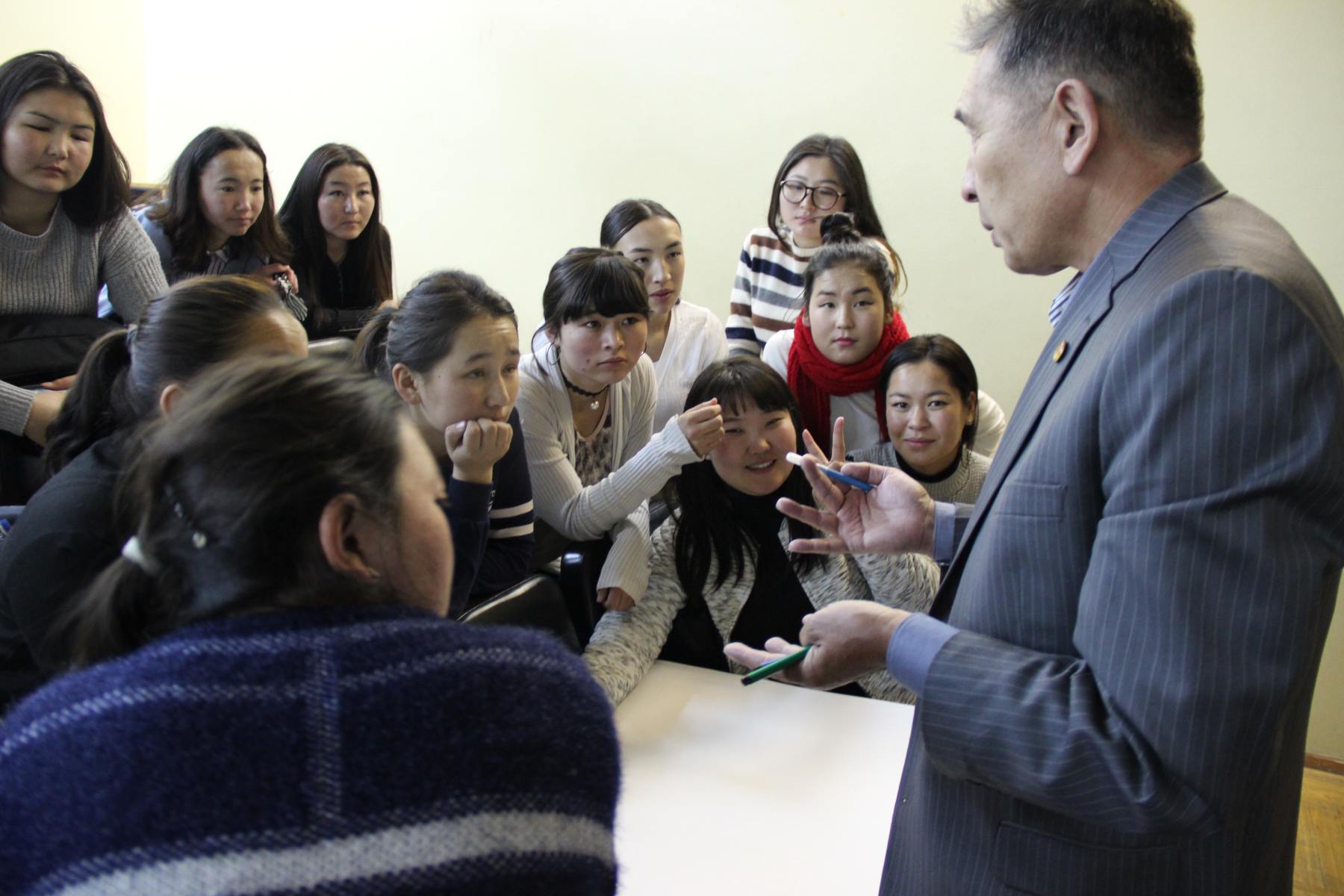
(Motivated Mongolian students at the Russian language foresight session. The team leader is Vladimir Pavlov. Ulaanbaatar, 2016)
What does the psychological need satisfaction in learning contexts actually mean regarding foreign language learning? I suppose it implies your own answers to the questions: “Why do I learn this foreign language?”, “Why this language is interesting for me?”, “What positive associations or positive experiences can I recall in connection with a particular language context, situation?”
There is no single answer for each of these questions. As researchers in the field of psychology and behavioral genetics assert, all people around the world are almost completely genetically identical[1] but we have around 0.1% variation in DNA sequences that partly explain our individual differences, including motivation to learn a particular subject. That`s why we (teachers) cannot apply a common teaching technique to everyone in class using a system of rewards and punishments. To foster productive engagement in learning activities, we need to inspire (not to force) our students to learn (Gordeeva, 2010).
(https://www.pinterest.ru/pin/262686590749675608/)
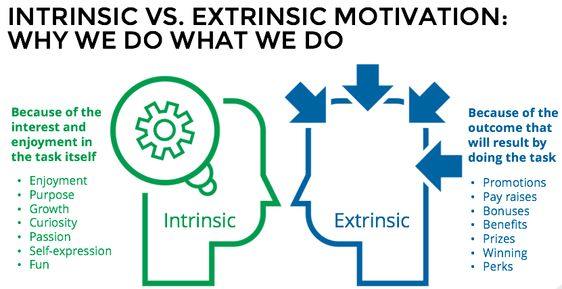
Let's get back to the motivation for learning languages. Psychologists have empirical evidence that both extrinsic (academic mandates, family impositions, job requirements, etc.) and intrinsic motivation (e.g., enjoyment in learning) contribute to success in learning any subject. The latest papers suggest a series of strategies for teachers to gradually lead students from extrinsic motivation to a “more internal” and autonomous motivation (Muñoz-Restrepo, Ramirez, & Gaviria, 2020). The objectives of contemporary education go beyond “knowledge transferring”, mastering cognitive skills and competencies. Students` well-being, one`s positive attitude towards school or university (or even e-learning platforms), learning process, teachers, and students` own potential contribute to their success in learning any subject. Gordeeva, Sychev, and Lunkina in their study (2019) revealed that the well-being of elementary school children from a large Russian sample (N=1006) is grounded on the positive effect of intrinsic and autonomous motivation and the negative effect of external motivation based on control and demands of teachers and parents. As for university forced e-learning, the autonomous strategy of self-motivation of educational activity helps students to achieve academic success and well-being. The potential of self-motivation is crucial at the first stages of learning foreign languages. Thus, if you demand diligent study from yourself, the result will not be as high as if you started with some inner interest in the subject being studied.
Regarding Russian language learning as a non-native language, I think that your inner interest in the specific culture of native speakers, places of interest, movies, songs, books, positive emotions for the learning process and even minimum academic success may lead you to high motivation in learning the Russian language. This is your intrinsic motivation. Modern psychologists agree that both intrinsic (inner interest), autonomous (feeling in control of one`s own behaviors and goals) and extrinsic motivation (“carrot and stick”, the prestige of the second language proficiency, etc.) are equally important for language learning or improving language proficiency.
The case of Mongolia.
The close geographical location of Mongolia to Russia determines the interest in the Russian language as an instrument of international communication in education and science. As a matter of fact, many people of the soviet period fiercely believe that Russia is an “elder brother” of Mongolia (Dagdandiin Batchuluun, an interview in the 2-nd video).
So it happened that Mongolia was called the "16-th republic" of the USSR. Many young scholars started their academic careers using the Russian language, in Russian universities.
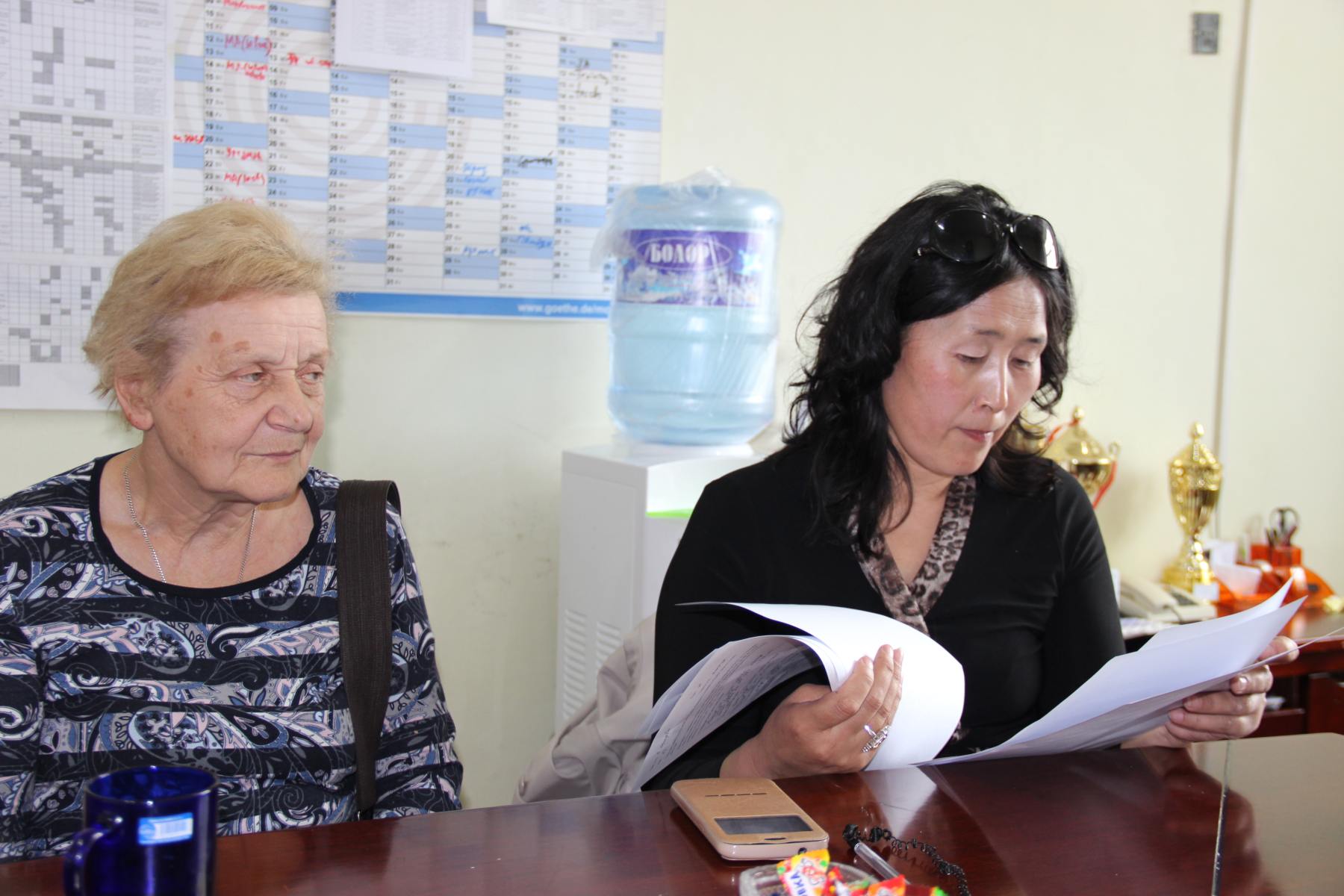
(Elena Borisovna Trofimova and Tumee Odonchimeg)
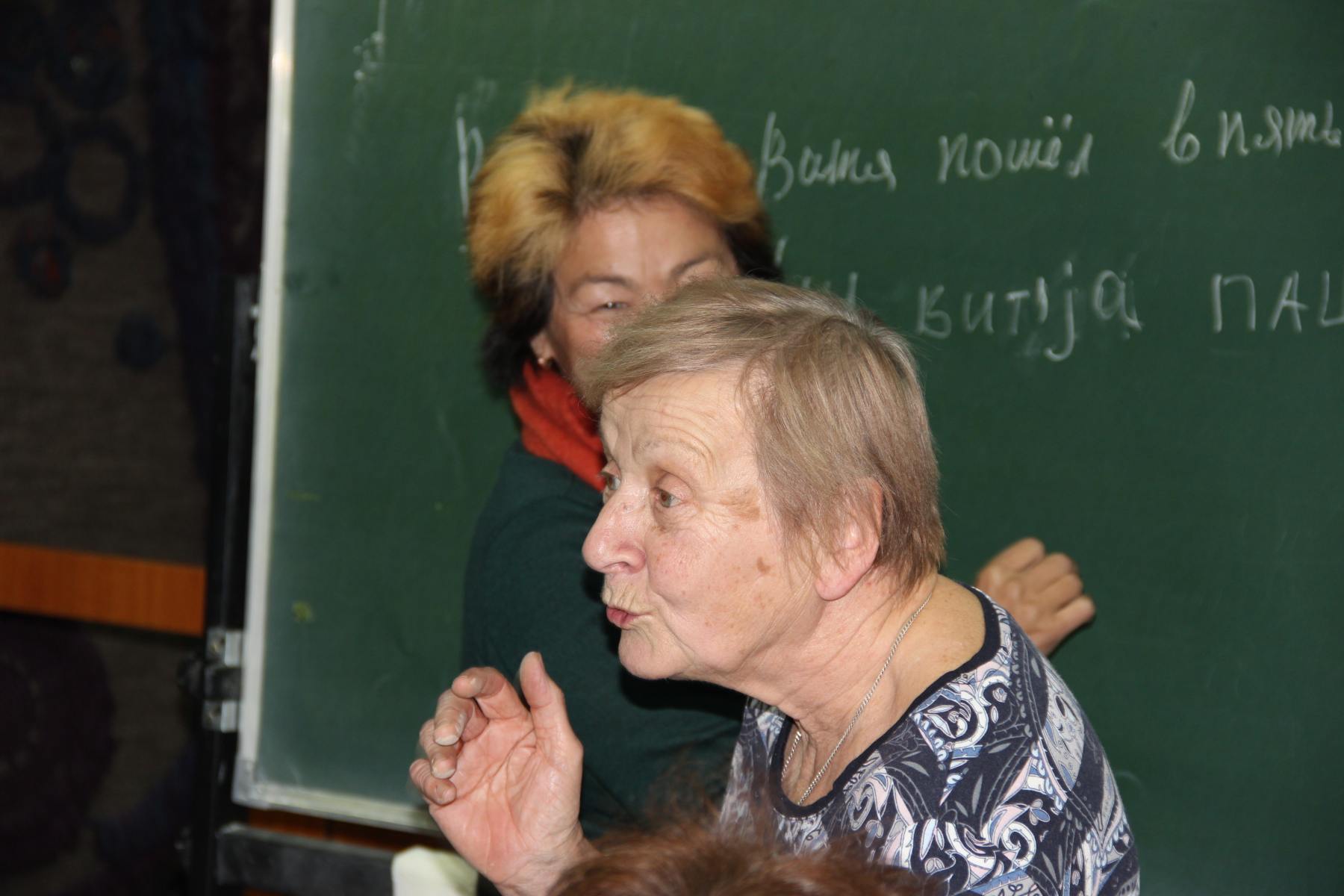
(Elena Borisovna Trofimova, Doctor of Philology, Professor. In Ulaanbaatar, 2016)
Ten years ago, when we were conducting our research work and teaching practice in Western Mongolia (in Khovd, Bayan Ulgii, Uvs aimags), we saw many students and families motivated in learning Russian. Now we have an online format for communication, conducting research, and teaching. We have our common homeland – Great Altai. The spirit of unity is so strong that we must be together. In a new digital age, our teachers need new methods, online platforms, and new insights to enhance students` Russian language proficiency and motivation to learn. Let`s meet a teacher of Russian, an alumnus of Khovd State University, and our friend.
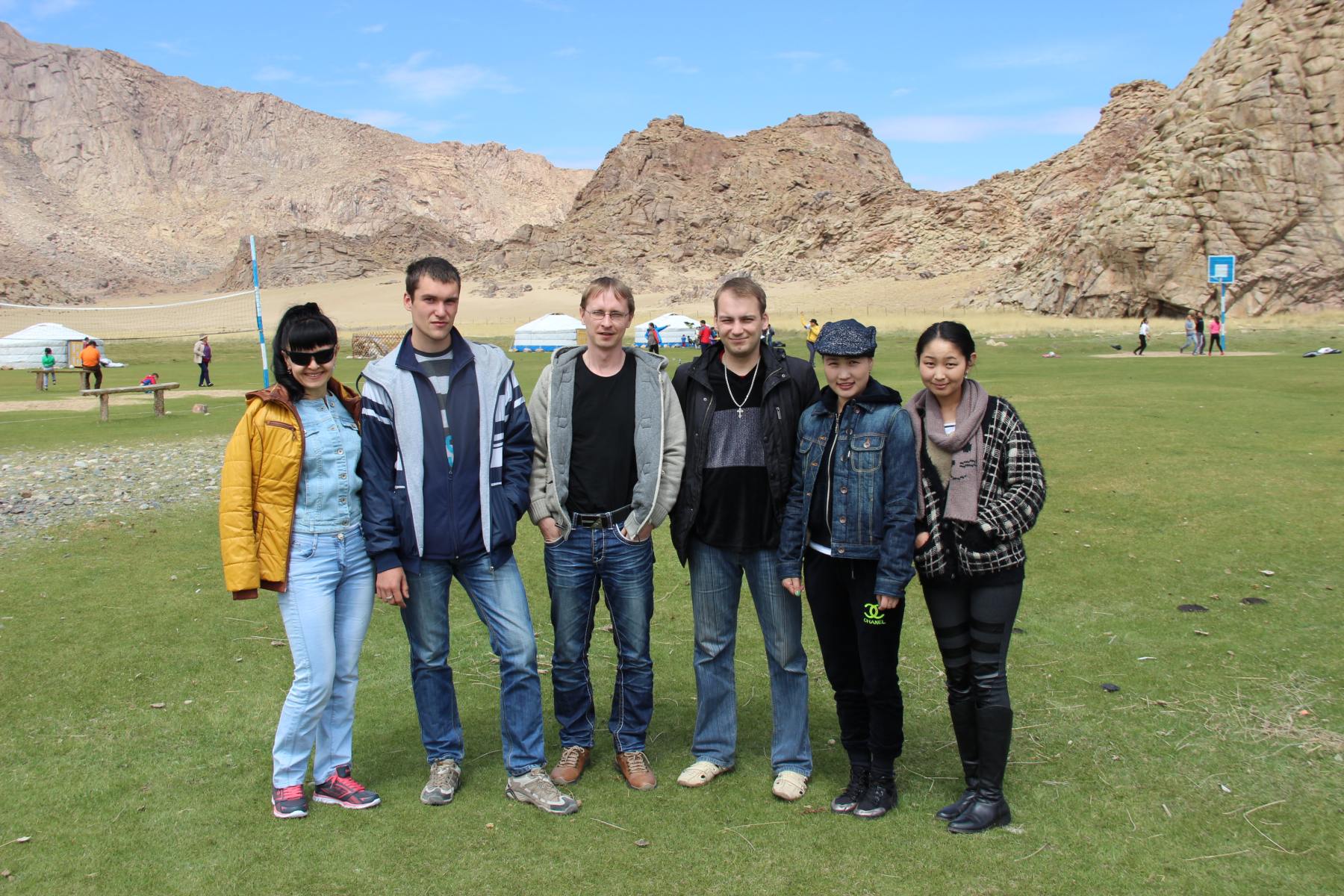
(Research team in Khovd, 2015. Ainur Bagzat is on the far right)
Ainur Bagzat:
“… Currently, I need some new e-learning applications for smartphones to motivate my students. I have many ideas how to prepare a corner of the Russian language in my school but need some new ideas to inspire best for my students… and most importantly, we, teachers, need live communication in Russian”.

That is why the participants of the International educational marathon "Russian Language Education in Mongolia" (2021) took an active part in all the events. All online master classes conducted by experts in Russian philology attracted much attention in university and school teachers and even ordinary Mongolian families.
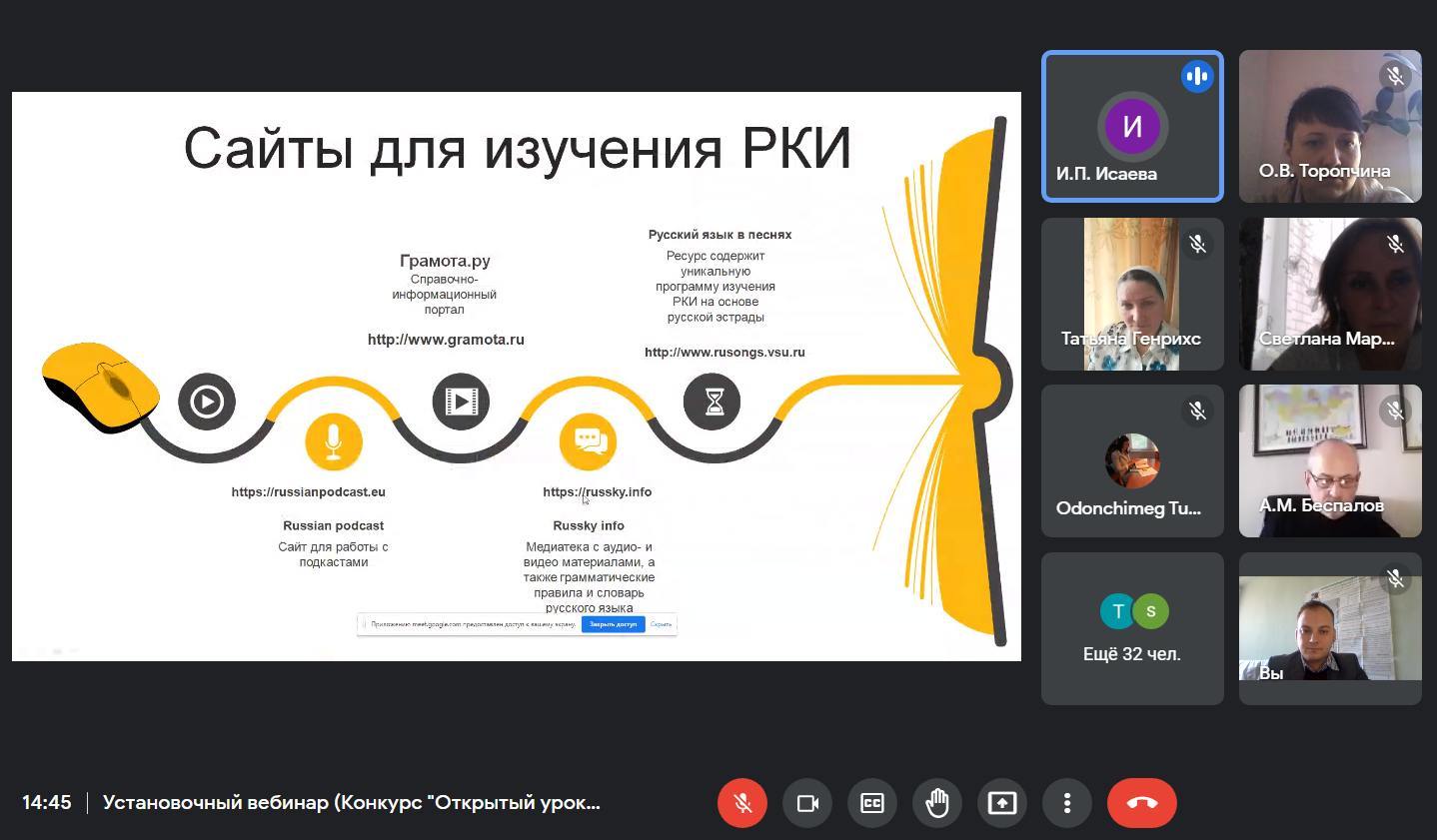
In 2021, master classes were held on the Google Meet platform. They included not only traditional work on phonetics, vocabulary, the syntax of the Russian language prepared by Mikhail Vlasov, Yulia Babicheva, Ulyana Trofimova but also touched upon communicative aspects of language use (master classes were prepared by Olga Toropchina and Mikhail Vlasov), as well as travel to the Russian literature (prepared by professor Natalia Guz). One new format (a humor festival) was suggested for practicing the spoken Russian language.

So, what do we actually have to do, always at our classes? The same thing that we did. We (hope) awakened not only external but also internal motivation in our students to learn Russian in different ways: sing, chat, read, have fun ...
We would like to thank our colleagues from Khovd State University for their organizational support. Many thanks to our participants from different countries for their active participation. To learn more about the event and further news – you`re welcome to visit our group “How to learn Russian as a foreign language?” (https://www.facebook.com/groups/405746940936785).
Mikhail Vlasov, Ph.D.in Linguistics, Associate Professor, Altai State University for Humanities and Pedagogy (Biysk, Russia)
Photo: Mikhail Vlasov
References:
Ryan, R.M., & Deci, E.L. (2020). Intrinsic and extrinsic motivation from a self-determination theory perspective: Definitions, theory, practices, and future directions. Contemporary Educational Psychology, 61, 101860. DOI:10.1016/j.cedpsych.2020.101860
Muñoz-Restrepo, A., Ramirez, M., & Gaviria, S. (2020). Strategies to enhance or maintain motivation in learning a foreign language. Profile: Issues in Teachers’ Professional Development, 22(1), 175-188. https://doi.org/10.15446/profile.v22n1.73733
Gordeeva, T. O. (2010). Self-determination theory: present and future. Part 2: Issues of a practical application of a theory. Psikhologicheskie Issledovaniya, 5(13). Retrieved from http://psystudy.ru/num/2010n5-13/378-gordeeva13
Гордеева Т.О., Сычев О.А., Лункина М.В. Школьное благополучие младших школьников: мотивационные и образовательные предикторы // Психологическая наука и образование. 2019. Т. 24. № 3. C. 32—42. doi: 10.17759/pse.2019240303
Gordeeva T.O., Sychev O.A. Self-Motivation Strategies: The Quality of Internal Dialogue Is Important for Well-Being and Academic Success. Psikhologicheskaya nauka i obrazovanie = Psychological Science and Education, 2021. Vol. 26, no. 5, pp. 6–16. doi:10.17759/pse.2021260501. (In Russ., аbstr. in Engl.)